


Power for AI: Why Electricity Is Overtaking Land as the Most Critical Scarce Resource for AI Data Centers and AI Factories.
Power for AI: Why Electricity Is Overtaking Land as the Most Critical Scarce Resource for AI Data Centers and AI Factories
Author: Johnny Ting
CACC ASEAN Legal Advisory Group
Legal • Investment • Business Solutions for the AI Era
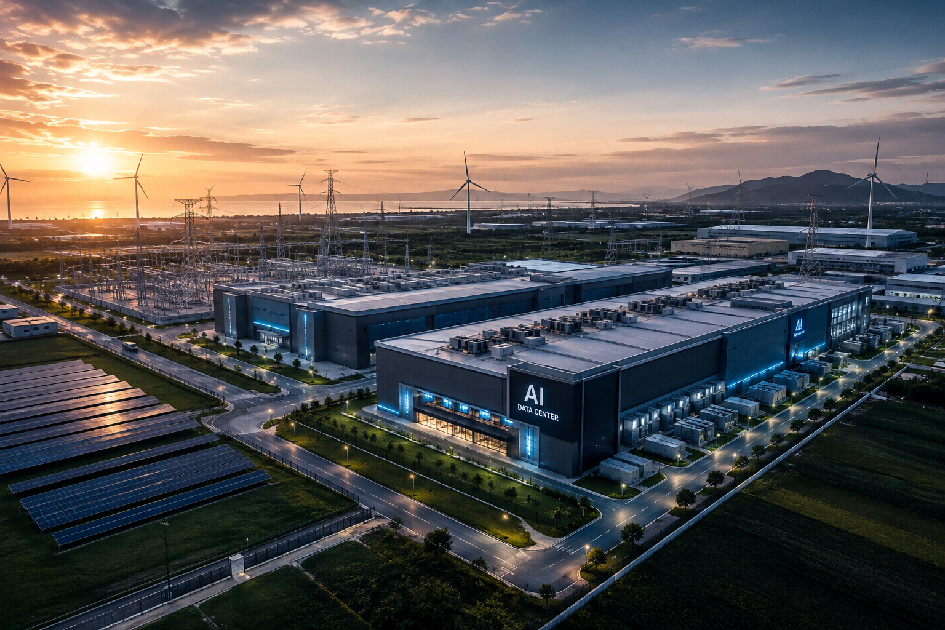
The AI Infrastructure Race Is Shifting from “Securing GPUs” to “Securing Power”
Over the past several years, when the market discussed artificial intelligence infrastructure, the most common questions were:
- Can we secure NVIDIA GPUs?
- Which generation of AI servers should we procure?
- How many GPUs should be deployed in a GPU cluster?
- How many racks should a data center accommodate?
However, as we enter the era of the AI Factory, investors are beginning to confront a more fundamental issue:
Even if the latest GPUs are available, an AI Data Center cannot become operational without sufficient, reliable, and timely access to electricity.
As a result, the competitive logic of global AI infrastructure is changing.
The traditional sequence may have been:
Land → Data Center → Server
It is increasingly becoming:
Power → Cooling → Data Center → GPU → Network → AI Services
And the first—and arguably most critical—element is:
Power
Research by the International Energy Agency (IEA) indicates that AI and data centers are becoming increasingly important drivers of global electricity demand.
The future success of an AI Data Center project will therefore depend not only on land location or construction costs, but increasingly on one fundamental question:
Can the project secure sufficient and reliable power, at the right location, at the right time, and at a commercially viable cost?
Why Do AI Data Centers Consume So Much Power?
Traditional data centers primarily support:
- Enterprise servers
- Cloud computing
- Website hosting
- Databases
- Storage
- ERP
- CRM
These workloads have traditionally been largely CPU-based.
AI Data Centers are fundamentally different.
They must continuously operate:
- GPU clusters
- Large Language Models (LLMs)
- AI training
- AI inference
- AI agents
- Robotics simulation
- Scientific computing
High-performance GPUs operating continuously under heavy workloads require substantial amounts of electricity.
At the same time, power must also be supplied to supporting infrastructure, including:
- Liquid cooling
- CDU systems
- Network switches
- Storage
- UPS systems
- Pumps
- Security systems
- Facility management systems
A true AI Factory is therefore increasingly becoming:
A digital industrial facility that converts electricity into AI computing capacity and intelligence.
Understanding AI Data Centers Starts with MW
One of the most common units investors encounter when entering the data center industry is:
MW — Megawatt
1 MW = 1,000 kW.
However, for an AI Data Center, a “10MW project” does not mean that all 10MW will be available to GPUs.
Electricity must also be allocated to:
- Cooling
- UPS losses
- Pumps
- Networking
- Lighting
- Security
- Facility infrastructure
Investors therefore need to ask two more important questions:
What is the actual IT Load?
And:
How much of the available power can ultimately be delivered to the GPUs?
What Do 10MW, 50MW and 100MW+ AI Data Centers Actually Represent?
10MW
A 10MW project can often serve as an entry-scale regional AI infrastructure development.
It may be suitable for:
- GPU Cloud
- Enterprise AI
- Initial Sovereign AI deployments
- AI inference
- Regional AI service platforms
For emerging ASEAN markets, 10MW can also represent a practical Phase 1 entry point, allowing the project to expand progressively according to customer demand.
50MW
At the 50MW level, the project has entered the category of large-scale digital infrastructure.
It will generally require more sophisticated:
- Grid connections
- Substations
- High-voltage infrastructure
- Backup power
- BESS
- Energy management
- Long-term PPAs
Projects of this scale will also typically require more substantial financing arrangements and greater coordination with government and utility authorities.
100MW+
Once a project exceeds 100MW, it can no longer be viewed simply as a real estate development or conventional data center.
It increasingly becomes a combination of:
Energy Infrastructure + Digital Infrastructure + AI Industrial Infrastructure
Such projects may require:
- Dedicated substations
- High-voltage transmission
- Multiple power sources
- Renewable energy
- BESS
- Long-term PPAs
- Large-scale infrastructure financing
They may even require coordination at the governmental level.
What Is Speed-to-Power?
AI infrastructure investors will increasingly encounter an important concept:
Speed-to-Power
Speed-to-Power does not simply ask:
“Does this country have electricity?”
Instead, it asks:
How long will it take from the investment decision until the project actually receives sufficient usable power for the AI Data Center?
Consider two projects:
Project A
Excellent land at an attractive price.
However, the grid connection requires four years.
Project B
The land is slightly more expensive.
However, 10MW of reliable power can be delivered within 18 months.
For an AI Data Center investor, Project B may be substantially more valuable.
The reason is straightforward: GPU technology evolves extremely quickly.
If an infrastructure project must wait three to five years for power, by the time electricity becomes available:
- The GPU generation may have changed
- Server architecture may have changed
- Cooling technology may have changed
- Customer requirements may have changed
- AI business models may have changed
Therefore:
Time itself is an investment cost in AI infrastructure.
Why Does Power Availability Affect Land Value?
Traditional real estate value is generally driven by:
- Location
- Transportation
- Commercial development
- Population
- Urban planning
AI Data Center land, however, may be valued according to very different criteria:
- Power availability
- Grid capacity
- Fiber connectivity
- Water and cooling conditions
- Flood risk
- Political stability
- Data regulation
- Government support
As a result, a site located far from a city center may have significantly greater data center investment value than prime commercial land if it can rapidly secure 50MW of power and has access to multiple international fiber routes.
This may eventually create a new class of infrastructure asset:
Powered Land
Powered Land refers to land for which electricity capacity has already been secured or clearly committed.
For AI infrastructure investors, such land may carry significant strategic value.
Why Is Grid Connection Becoming One of the Biggest Project Risks?
Building an AI Data Center is fundamentally different from simply applying for ordinary commercial electricity service.
Large projects may involve:
- Grid Capacity Study
- Load Study
- Substation
- Transmission Line
- Transformer
- Interconnection Agreement
- Construction Permit
- Environmental Approval
A delay at any one of these stages can affect the entire project schedule.
The IEA has warned that grid and related infrastructure bottlenecks may delay some planned data center projects.
Investors should therefore conduct:
Power Due Diligence
before acquiring the land.
They should not purchase the land first and only then ask:
“How many MW can this site actually receive?”
Getting this sequence wrong can result in an extremely expensive investment mistake.
Why Are PPAs Becoming Increasingly Important?
PPA stands for:
Power Purchase Agreement
Large data centers generally require long-term, stable, and predictable electricity supplies.
Investors may therefore enter into long-term PPAs with:
- Utility companies
- Renewable energy developers
- Solar projects
- Wind projects
- Hydropower projects
The value of a PPA goes beyond simply obtaining electricity.
Price Certainty
A long-term PPA can lock in electricity prices or establish a predictable pricing mechanism.
Supply Certainty
It can help ensure that the project has access to sufficient energy.
ESG
It can support renewable energy and sustainability objectives.
Financing
A long-term power arrangement may also increase the predictability and bankability of project financing.
Why Is Renewable Energy Becoming Increasingly Important to AI Factories?
Global hyperscalers and major technology companies are placing increasing emphasis on:
- Renewable energy
- Carbon reduction
- ESG
- Sustainable data centers
As a result, the future competitiveness of an AI Data Center may no longer be defined simply by saying:
“We have 100MW.”
The more important question may become:
“Where does our 100MW come from?”
Possible energy sources include:
- Solar
- Wind
- Hydro
- Geothermal
- Nuclear
- Natural gas
- Grid mix
Different energy structures affect:
- Electricity prices
- Reliability
- ESG performance
- Financing
- Acceptance by international customers
The IEA expects renewable energy to meet an important share of additional data center electricity demand toward 2035, while natural gas, nuclear power, and other dispatchable energy sources are also expected to continue playing important roles.
The future AI Factory therefore needs more than a:
Computing Architecture
It also needs an:
Energy Architecture
Why Is BESS Entering the AI Data Center Ecosystem?
BESS stands for:
Battery Energy Storage System
Many traditional data centers have relied primarily on:
Grid → UPS → Generator
Future infrastructure may increasingly adopt:
Grid + Renewable Energy + BESS + Generator → Data Center
BESS can provide several functions:
- Peak shaving
- Load shifting
- Grid support
- Renewable energy integration
- Backup support
- Energy cost optimization
However, one point must be made very clear:
BESS should not be treated as a simple replacement for a stable electricity grid.
AI Data Centers are high-load facilities operating 24 hours a day.
The more appropriate role of BESS is generally to enhance system resilience, manage peak demand, integrate renewable energy, and strengthen power reliability.
Short-duration energy storage should not be mistaken for long-term baseload power.
Why Might Future Data Centers Be Planned Together with Power Plants?
The traditional model has been:
Find the data center site first → Apply to the utility for electricity
The future model may increasingly become:
Find the energy first → Decide where to locate the data center
This can create several new development models.
Co-Located Energy + Data Center
Energy infrastructure and data centers can be developed together.
Renewable Energy + BESS + AI Factory
Renewable energy, battery storage, and AI infrastructure can be planned as an integrated system.
Gas-to-Power + Data Center
Reliable natural-gas generation can support large-scale computing infrastructure.
Future Nuclear / SMR + AI Infrastructure
In jurisdictions where regulatory frameworks and market conditions become suitable, Small Modular Reactors (SMRs) could eventually become another energy option for large AI campuses.
This development demonstrates an important structural shift:
AI Data Centers are connecting the energy industry with the technology industry.
Why Must Investors Understand PUE?
PUE stands for:
Power Usage Effectiveness
It is a metric used to evaluate data center energy efficiency.
Conceptually:
Total Data Center Energy Consumption ÷ IT Equipment Energy Consumption
For example, if a project secures 10MW of power but a substantial portion is consumed by cooling and other facility infrastructure, the amount of electricity actually available for GPU computing will be reduced.
Investors therefore should not simply ask:
“How many MW does the project have?”
They should also ask:
“How many MW actually reach the IT Load?”
And ultimately:
“How much electricity can be converted into saleable AI compute?”
That is the commercial logic of an AI Factory.
From Power to Token: The Real Economic Model of an AI Factory
One of the most important value chains for understanding the future AI Factory is:
Power → Cooling → GPU → Compute → Token / Inference → AI Services → Revenue
In other words:
One of the raw materials of an AI Factory is:
Electricity
And its ultimate product is:
Intelligence
Therefore, the fundamental question for future AI infrastructure investment is no longer simply:
“How much does the GPU cost?”
It is increasingly:
How much AI revenue can each unit of electricity ultimately generate?
This may gradually become one of the most important economic metrics in the AI Factory business model.
Why Could ASEAN Become an Important “Power for AI” Market?
Electricity demand across Southeast Asia continues to grow rapidly.
According to the IEA figures cited in the original CACC article, overall electricity demand in Southeast Asia is expected to grow at an average annual rate of approximately 5.3% from 2026 to 2030, while regional data center electricity demand is also expected to increase substantially by 2030.
This represents both an opportunity and a challenge.
ASEAN offers:
- A rapidly growing digital economy
- A young population
- Increasing AI adoption
- Renewable energy resources
- International capital
- Growing data center investment
At the same time, the region must address:
- Grid capacity
- Power reliability
- Energy prices
- Renewable integration
- Infrastructure financing
- Government approvals
Therefore, the future winners of ASEAN AI infrastructure may not necessarily be the markets with the cheapest land.
They may instead be:
The markets capable of delivering reliable, scalable, and competitively priced power the fastest.
What Are the Legal and Commercial Risks of Power Projects?
This Is an Area of Particular Focus for CACC
The energy arrangements for a large AI Data Center may involve critical legal and commercial questions.
PPA
How should the electricity pricing mechanism be structured?
Grid Connection Agreement
When must the utility complete the connection?
Capacity Commitment
Is the committed MW capacity legally binding?
Delay Risk
If electricity delivery is delayed by two years, who bears the resulting losses?
Renewable Energy Certificates
How will renewable or green energy attributes be recognized and documented?
BESS Agreement
Who will invest in, own, and operate the battery energy storage system?
EPC
How should performance guarantees for substations, electrical equipment, and BESS be structured?
Financing
Will banks and financial institutions accept these contractual arrangements as a basis for project finance?
These issues directly affect:
- Construction schedule
- CapEx
- Operating costs
- Financing
- Customer contracts
- Project valuation
A Power Agreement is therefore not merely an engineering document.
It may be one of the most important commercial agreements in an AI Data Center project.
What Is the Correct Investment Sequence for an AI Data Center?
Traditional investors may follow:
Land → Building → Equipment → Power
For an AI Factory, however, a more appropriate development sequence may be:
Power → Land → Fiber / Network → Cooling → Data Center Infrastructure → GPU Infrastructure → AI Platform → Customers
At the same time, the capital structure must be planned in parallel:
SPV → Equity → Debt / Project Finance → Infrastructure Investment → GPU Financing → Operating Revenue
This is why large-scale AI infrastructure projects can no longer be decided by IT teams alone.
They require the coordinated involvement of:
- Energy
- Engineering
- Finance
- Legal
- Investment
- Government
- Technology
CACC Insight: The Real Asset of a Future AI Data Center May Not Be the Building — It May Be “Power +Connectivity + Permits”
A data center building can be replicated.
Servers can be purchased.
GPUs can be upgraded.
But the following assets may require years to establish:
- Secured power capacity
- Grid connection
- Substation
- Fiber connectivity
- Government approvals
- Land rights
- Environmental permits
The core asset value of future AI Data Centers may therefore increasingly concentrate around:
Power + Connectivity + Permits
—not merely the building itself.
This is why CACC believes that AI infrastructure projects should conduct the following at the early investment stage:
- Legal Due Diligence
- Power Due Diligence
- Land Due Diligence
- Regulatory Due Diligence
- Investment Structuring
Without these foundations, having land and capital alone may still not be sufficient to build a commercially viable AI Factory.
Free Initial AI Data Center / AI Factory Project Assessment
Free Initial Project Assessment
If you are planning an AI Data Center, AI Factory, GPU Infrastructure, Power Infrastructure, BESS, Renewable Energy, Liquid Cooling, cross-border investment, or ASEAN AI Infrastructure project, CACC ASEAN Legal • Investment • Business Solutions can provide a free initial project assessment based on the project location, investment scale, and commercial objectives.
Please click the Telegram, WhatsApp, Messenger, or LINE contact icons on the right side of our website to contact the CACC advisory team directly for your free initial project assessment.
We can assist with:
- Preliminary feasibility assessment for AI Data Center and AI Factory projects
- Power availability, land, and infrastructure legal due diligence
- PPA, grid connection, BESS, and energy contract structuring
- SPV, JV, equity investment, and project finance structuring
- EPC, equipment procurement, SLA, and long-term operating agreements
- ASEAN market entry, government approvals, taxation, and cross-border compliance
- GPU Infrastructure, AI Governance, and long-term legal advisory services
The AI infrastructure race is entering a new stage—from securing GPUs to securing power.
Let CACC assist you in building an integrated, bankable, scalable, and long-term competitive AI infrastructure investment structure—from Power, Land, Data Center, and GPU to Financing and ASEAN Expansion.
About CACC
CACC ASEAN Legal • Investment • Business Solutions provides integrated advisory services in AI governance, cross-border investment, ASEAN market entry, AI Data Centers, GPU Infrastructure, Family Office, and international legal compliance.
Our multidisciplinary team assists enterprises and investors in developing sustainable business strategies across Southeast Asia.
Legal • Investment • Business Solutions for the AI Era
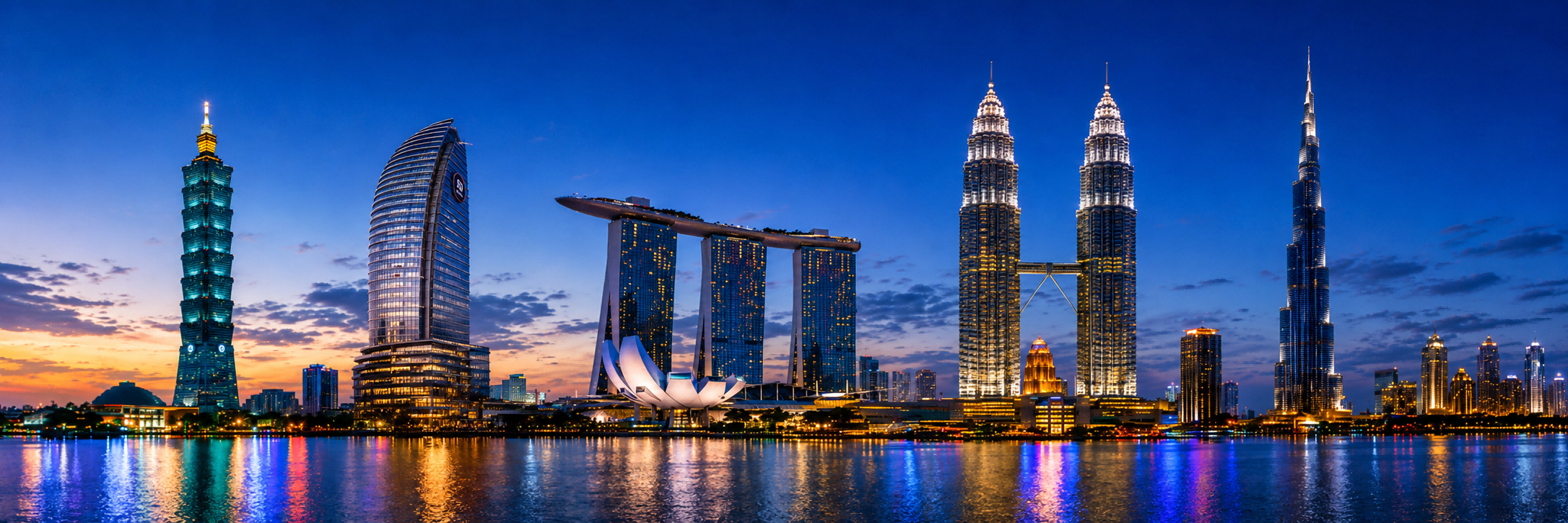
Taipei │ Phnom Penh │ Singapore │ Kuala Lumpur │ Bangkok │ Ho Chi Minh City │ Dubai